This Week in Masonic History·August 10 to August 16, 2026
The Cultivated Mind: Mirabeau B. Lamar
This week holds the birthday of Mirabeau Buonaparte Lamar — August 16, 1798 — poet, cavalry commander at San Jacinto, second president of the Republic of Texas, and the man Texas calls the Father of Texas Education, whose name stands in the member ledger of Harmony Lodge No. 6 at Galveston and whose grave lies in the old Masonic cemetery at Richmond.
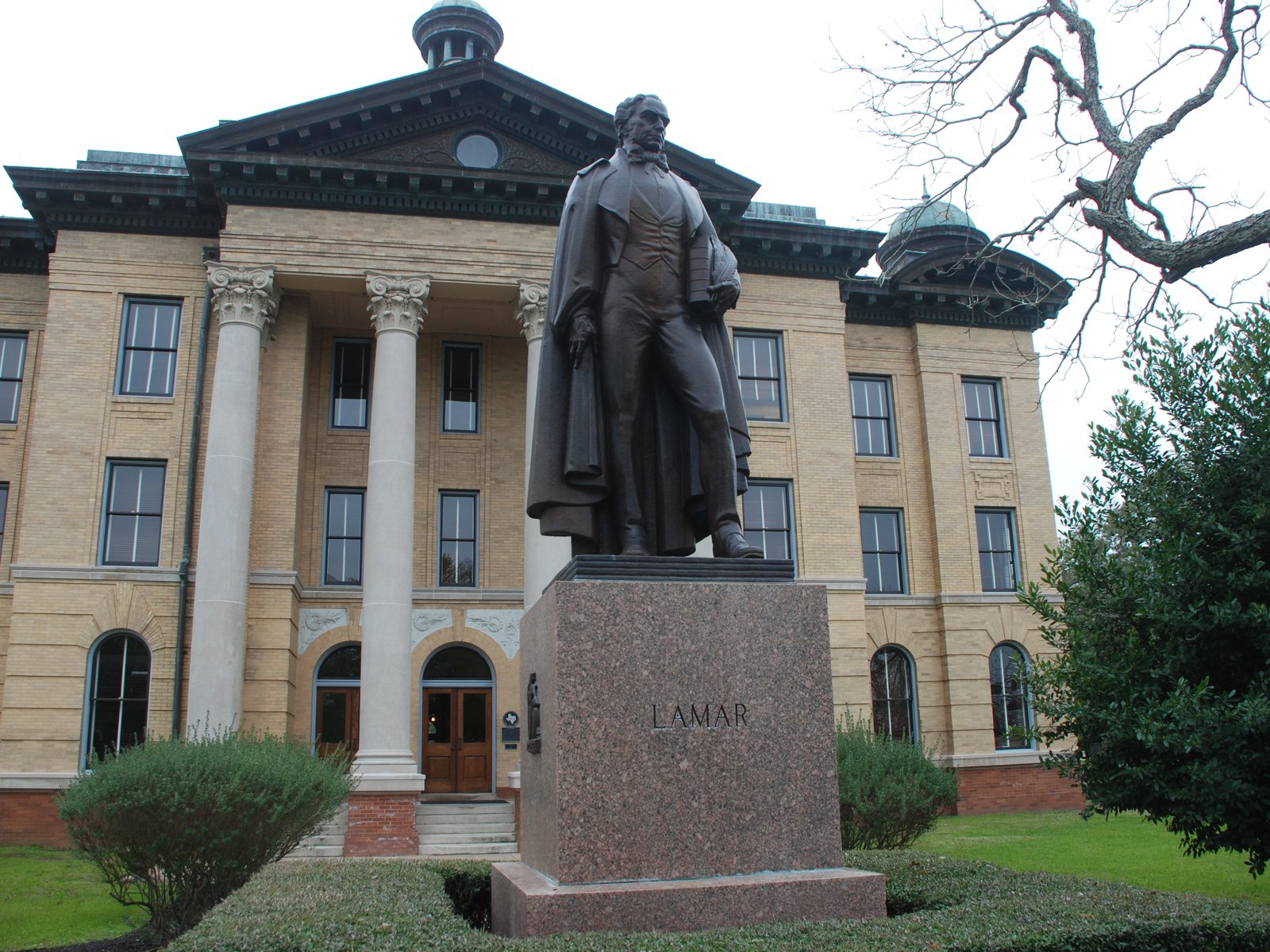

On August 16, 1798, Mirabeau Buonaparte Lamar was born near Louisville, Georgia, with a name that sounded like a prophecy his family could not have explained. He would carry that operatic name through careers as a storekeeper, newspaperman, state senator, cavalry commander, president of a republic, diplomat, and poet — and out of all that striving, the thing that lasted was the quietest of his causes. Texas remembers him as the Father of Texas Education. That title, and the reason it survived when so much else he built did not, is the story this week.
The Georgia years shaped everything. Educated at academies in Milledgeville and Eatonton, Lamar helped publish a newspaper at Cahawba before he was twenty-five, became secretary to Georgia’s governor George M. Troup in 1823, founded the Columbus Enquirer in 1828, and won a state senate seat in 1829. He was a man built for the public stage — and then the stage collapsed. His wife Tabitha, whom he had married in 1826 and nursed through tuberculosis, died on August 20, 1830. He withdrew from reelection, lost two races for Congress, and wandered. When he finally came to Texas in 1835, following James W. Fannin, Jr., he came, the Handbook of Texas records, “to collect historical data” — a grieving writer looking for a subject, not a soldier looking for a war.
The war found him anyway. When the revolution broke out, Lamar joined the Texas army at Groce’s Point as a private. On April 20, 1836, the day before San Jacinto, his daring in a cavalry skirmish saved the lives of two surrounded Texans — Thomas J. Rusk and Walter Paye Lane — and as the battle was about to begin he was verbally commissioned a colonel and assigned to command the cavalry. He had gone from private to colonel in a single afternoon, and in the battle the next day he led the horsemen on the Texan right. The new Republic promoted him faster still: secretary of war within weeks, vice president by the national election of September 1836, and on December 10, 1838, at just forty, president of the Republic of Texas.
His presidency was ambitious in every direction, and most of those directions ended in grief. He dreamed of a Texas empire stretching to the Pacific and sent the Santa Fe expedition toward New Mexico, where its members were captured and marched to Mexican prisons. His Indian policy abandoned Sam Houston’s diplomacy for expulsion and war: the Cherokees were driven into Arkansas in 1839, and the 1840 campaign against the Comanches cost the Republic $2.5 million it did not have. The treasury financed itself with paper — the “redback” notes issued from 1839 — which depreciated until they were nearly worthless. A fair accounting says so plainly: much of what Lamar attempted failed, and some of it did lasting harm to people who had been promised better. This series honors Texas Masons best by telling their history whole.
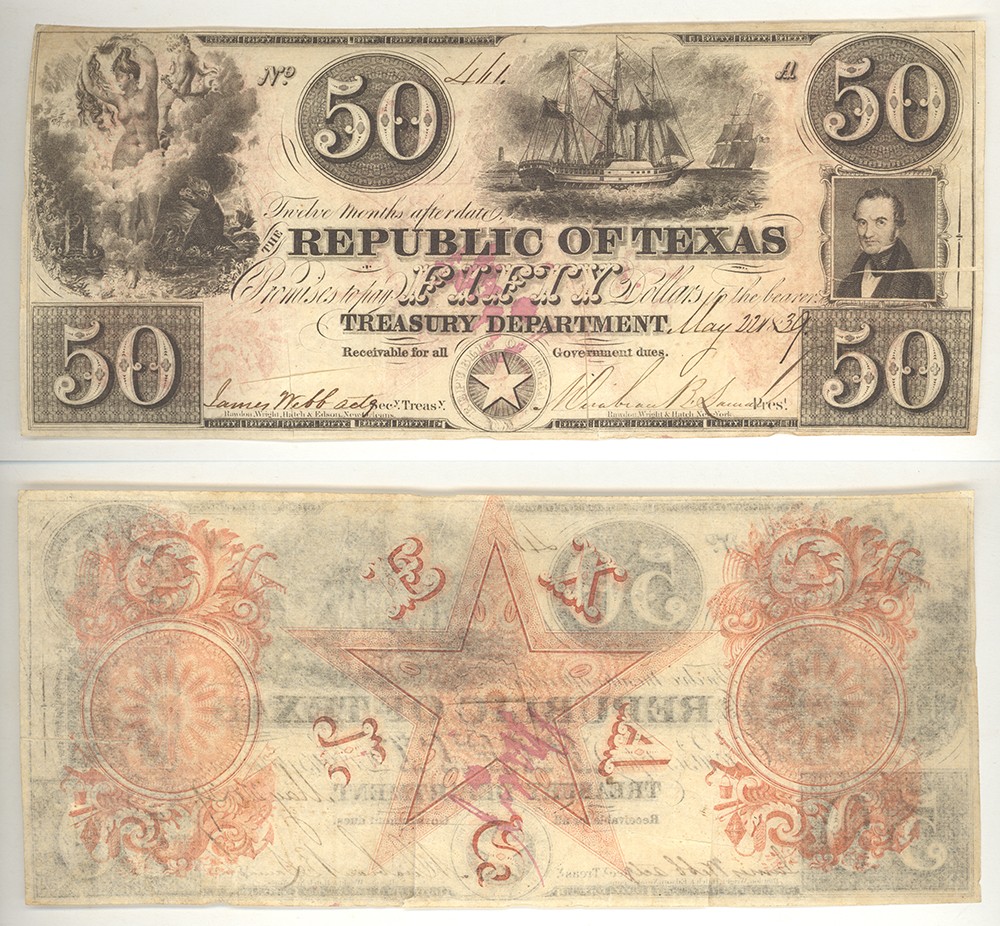
And yet in the middle of that same hard-pressed administration, Lamar did the one thing his successors never managed to undo. He argued to the Texas Congress that a free people’s institutions rest on the minds of their citizens — “the cultivated mind is the guardian genius of democracy,” in the phrase that later inspired the motto of the University of Texas — and he asked Congress to endow education not with the Republic’s dying currency but with the one asset Texas held in abundance: land. The act of January 26, 1839, set aside three leagues of land in every county for public schools, and fifty leagues more for university education. Decades passed before Texas actually organized the schools — the Handbook is honest that the system came long after the endowment — but the principle held, the Constitution of 1876 folded that legacy into a perpetual school fund, and, as the Texas House of Representatives put it in a 2023 resolution honoring the Masons of Texas, “such a fund continues to supplement the education budget today.” The redback in the figure above was signed by Lamar and died within a few years. The land grant beneath the schoolhouses is still paying.
Lamar’s Masonry belongs to the same Galveston world that built the early Republic. Harmony Lodge No. 6 began its work there in 1839 — some twenty brethren meeting on the Strand under a dispensation from the new Grand Lodge of Texas, with a charter following in 1840 — and its member ledger, kept from the founding and signed by every new brother since, carries the name of Mirabeau B. Lamar among the founders of the city and the Republic. The lodge’s guiding spirit was Samuel May Williams, remembered as the father of Harmony Lodge No. 6 and elected Grand Master in 1840 — the same Williams whose arrival in Texas opened this series in June. The picture is worth pausing over: the president of the Republic entering his name in a lodge book alongside Galveston’s first mayors and merchants, in a fraternity whose Grand Lodge was barely two years old. In a nation with no old institutions, the lodge was one of the few rooms where the Republic’s builders practiced permanence.
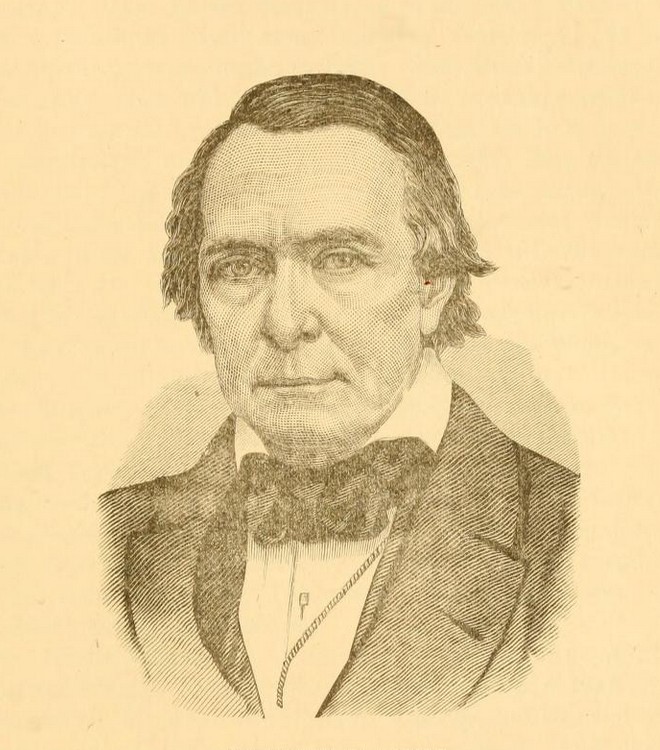
The rest of his life was an epilogue with flashes of the old fire: Mexican War service under Zachary Taylor, a term in the Second Texas Legislature, a ministership to Nicaragua and Costa Rica, and in 1857 the publication of Verse Memorials, the book of poems he had been writing all along. He died of a heart attack at his Richmond plantation on December 19, 1859, and was buried in the Masonic cemetery there. Even his grave sits inside a Masonic story: that burial ground began in 1825, when William Morton, an early settler of Austin’s colony, buried a fellow Mason named Robert Gillespie and raised a brick tomb over him — believed to be the first Masonic landmark erected in Texas — and the ground was later kept by Richmond’s Morton Lodge No. 72. The second president of Texas rests in soil that Masons consecrated to the memory of a brother before Texas had a revolution, a republic, or a Grand Lodge.
Texas Masonry has never let go of Lamar’s cause, and it has been candid about why: the fraternity that teaches its members to work on rough stone until it is true recognized its own doctrine in the man who endowed the schools. Since 1950 the Grand Lodge of Texas has set aside a week each March as Texas Public Schools Week — a tradition the state’s House of Representatives honored in 2023, recalling that “many of the state’s earliest leaders were Masons who led the movement for public education,” Lamar first among them. Since 1988 the Grand Lodge has placed the Lamar Medal in lodges across the state, awarded to students and educators for excellence in scholarship and citizenship. The fraternity has, in this sense, been keeping Lamar’s accounts current for more than a century and a half.
For Johnson City Lodge No. 561, chartered by the Grand Lodge of Texas on December 16, 1882, Lamar’s legacy is not an abstraction. Every school that ever opened its doors in Blanco County — the one-room schools in the draws, the schoolhouse the town raised, the district our children attend now — stands on the endowment principle a poet-president argued through a bankrupt Congress in January 1839. When our lodge marks Public Schools Week each spring, it is settling an old family debt. Lamar’s empires failed; his paper money died; his wars cost more than they won. What endured was the patient thing, the endowed thing, the thing built for people not yet born. Freemasonry asks its members to build that way on purpose. The cultivated mind is the guardian genius of democracy — and in Blanco County, as in every county in Texas, the guardian still keeps its post.
Listen to This Story
6:06Read it here. Hear it anywhere.
Take the Story With You
Never miss a week.
Subscribe once and each new Texas Masonic history episode will arrive automatically in your podcast app.