Johnson City LodgeNo. 561 · A.F. & A.M.

Read It · Hear It · Keep It

This Week in Masonic History

One sourced story each week, told two ways: a richly illustrated history feature and a short podcast you can take with you.

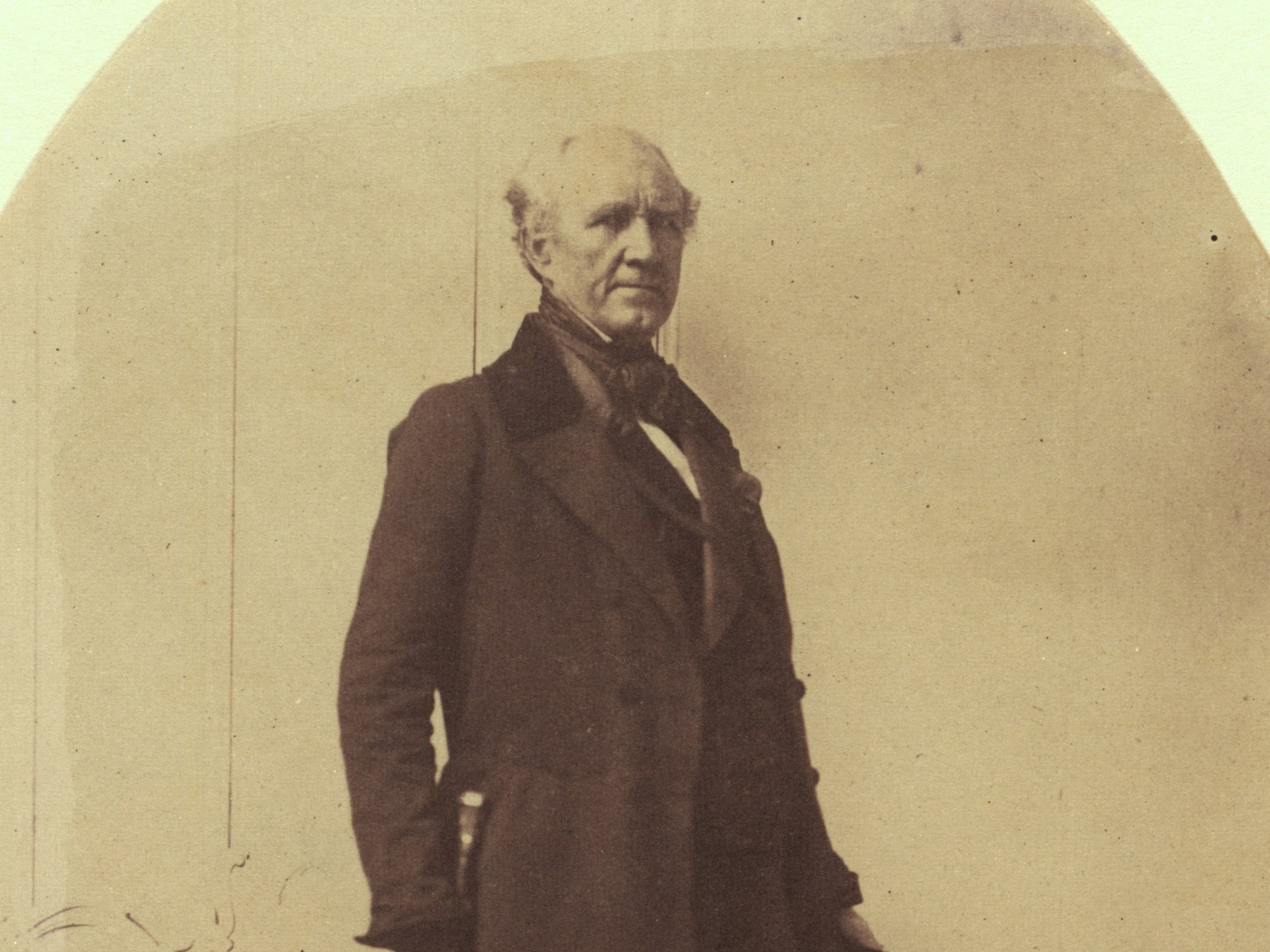
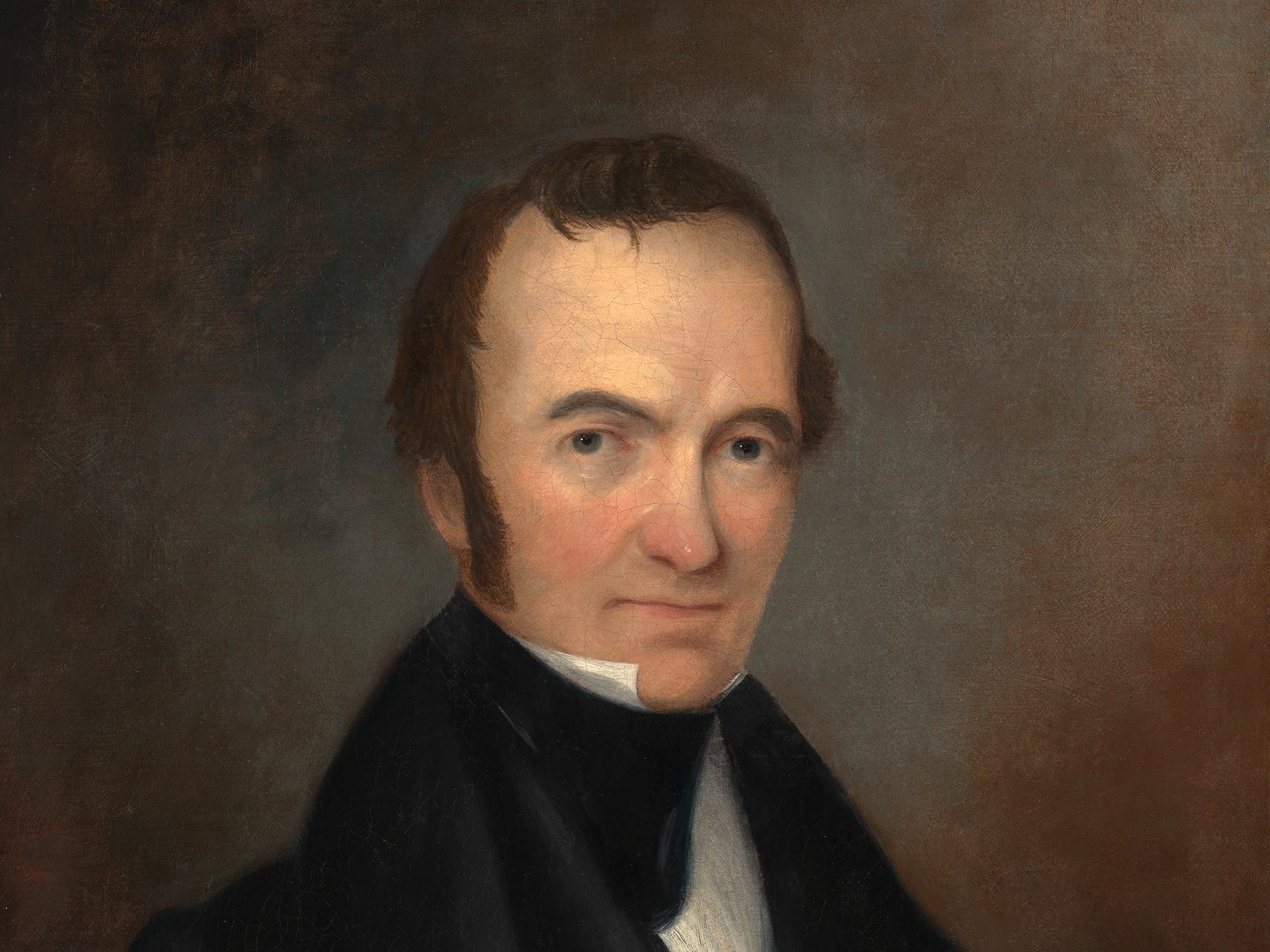
Posthumous oil portrait of Stephen F. Austin, painted about 1840: a slight, balding man in his forties with dark side-whiskers, wearing a black coat and stock over a white shirt, turned three-quarters toward the viewer against a plain brown ground, his expression tired and level.
Stephen Fuller Austin, painted by an unidentified artist about 1840 — a posthumous likeness, made four years after he died at forty-three, of a man who had spent himself on Texas.National Portrait Gallery, Smithsonian Institution (NPG.93.380), via Wikimedia Commons.

This Week

August 31 to September 6, 2026

The Man Who Asked Permission: Stephen F. Austin at Brazoria

On September 5, 1836, Texas elected its first president and gave Stephen F. Austin 587 votes — third place, behind Sam Houston and Henry Smith. A year earlier, in the town of Brazoria, Austin had risen at a public dinner and sanctioned the Consultation that made such a vote possible. Six months before that, in the same town, six Masons who could not get a charter out of Mexico had quietly gone to Louisiana for one. A week about the difference between asking permission and constituting yourself — and about a man who spent his life doing the first and died a year after finally doing the second.

The Story

The Man Who Asked Permission: Stephen F. Austin at Brazoria

This week carries two Texas dates that belong in the same sentence, though nothing in the record joins them except one man and one town.

On September 5, 1836, the people of the new Republic voted for their first president. Sam Houston took 5,119 votes. Henry Smith, governor of the provisional government, took 743. Stephen F. Austin took 587 — third place, in a country he had very nearly made by hand.

Three days later on the calendar, a year earlier on the clock, is the date that makes the vote intelligible. On September 8, 1835, at a public dinner in the town of Brazoria, Austin rose and said the thing that opened the door.
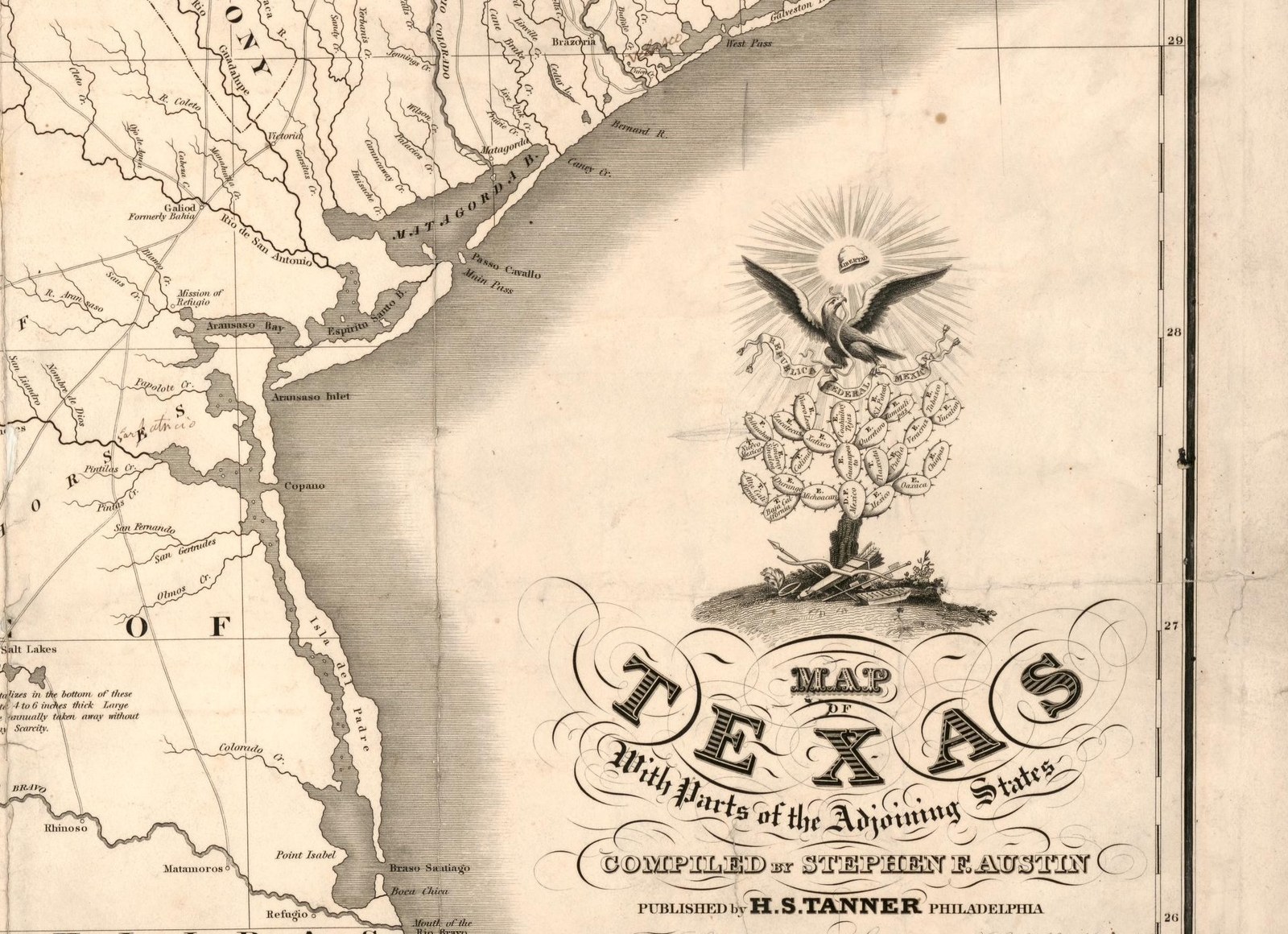
Detail from an 1830 engraved map: the Gulf coast running from Matagorda Bay past Aransas Bay, Copano, and Point Isabel toward Matamoros, and beside it an ornate title cartouche showing an eagle with a serpent in its beak perched on a prickly pear beneath a radiant sunburst, above the lettering MAP OF TEXAS With Parts of the Adjoining States, COMPILED BY STEPHEN F. AUSTIN, PUBLISHED BY H. S. TANNER, Philadelphia.
Detail of the title cartouche from Map of Texas with Parts of the Adjoining States, compiled by Stephen F. Austin and published by H. S. Tanner at Philadelphia in 1830. The emblem crowning Austin's Texas is the eagle and serpent of Mexico. Library of Congress, Geography and Map Division (G4030 1830 .A9); free to use and reuse.

Austin’s whole method — the thing he was better at than anyone else in Texas — was the petition. Under Mexican law he obtained three empresario contracts, in 1825, 1827, and 1828, to settle nine hundred additional families beyond his first colony; by 1832 his colonies held eight thousand people. The Handbook of Texas states his governing principle without decoration: “Harmony with state and federal authorities was indispensable to the success of the colonies.” He was not a revolutionary and did not want to be one. He was a man who filled out the forms, and who believed — with real evidence — that the forms worked.

That habit reached into the lodge. Among the first Americans to come to Texas in the 1820s, the Handbook notes, “were a number of Masons, including Stephen F. Austin.” In 1828 he and six other Masons met at San Felipe and petitioned the Grand York Lodge of Mexico for a dispensation. Where and when Austin was made a Mason is not settled by the institutional record, and this series will not invent it; what the record establishes is what he did with it. Presented with a fraternity he wanted in Texas, he did the same thing he did with land and with law — he applied to the lawful authority and waited.

The answer never came. The petition, the Handbook says, “evidently reached Mexico at the height of a quarrel between the ‘Yorkinos’ and ‘Escoceses’ (adherents of the Scottish Rite) and disappeared.” Read that slowly. A request for a lodge was swallowed whole by a fight between lodges — and a colonist’s polite application from the Brazos had no chance of being heard over it. Austin had asked correctly and been answered by nothing at all.

He tried the same instrument on a larger question and it cost him far more. He left San Felipe in April 1833 carrying the colonists’ case to Mexico City, arrived in July, and — this is the part usually forgotten — he won. He “persuaded the government to repeal the Law of April 6, 1830,” the statute that had choked off Anglo immigration. Then, in January 1834, he was arrested at Saltillo “under suspicion of trying to incite insurrection in Texas” and hauled back to the capital, shifted from prison to prison until December, when he was released on bond. A general amnesty freed him in July 1835, and at the end of August he came home by way of New Orleans. Two petitions to Mexico City: one vanished into a quarrel, one cost him eighteen months in Mexican custody.

While he was in those prisons, six men at Brazoria stopped asking.

In the spring of 1835 — March, according to the Texas Historical Commission’s marker at the site — Dr. Anson Jones and five others, in the Handbook’s words, “fearing Mexican reprisals, met secretly under the Masonic Oak near Brazoria and petitioned the Grand Lodge of Louisiana for a charter.” They did not petition Mexico. They had watched what Mexico did with petitions. John Henry Holland, grand master of Louisiana, issued the dispensation, and on December 27, 1835, Holland Lodge No. 36 met for the first time, with Jones presiding as worshipful master. The marker the state set at Brazoria in 1966 records it in fourteen words: “Site of organization, March 1835, the first Masonic Lodge in Texas, Holland Lodge, Brazoria.”

That is the whole argument of the week, and it happened first among Masons, in a field, in secret, over a charter. When the sovereign will not warrant you, you do not stop being a lodge and you do not proceed without a warrant. You find a lawful authority that will answer.

Six months later, in that same town, Austin did the identical thing on the scale of a country. The word “consultation” had first been used at a meeting in Columbia on August 15, 1835, and delegates had not yet been chosen. Austin had been home about a week and a half, and he carried more moral weight than any man in Texas; had he opposed the call, it would likely have died. Instead, the Handbook records, “in a notable speech at Brazoria on September 8 he gave it his sanction, and election of delegates proceeded.” The most cautious man in Texas, the lifelong advocate of harmony with the authorities, blessed a body no government had authorized.

Notice what the Consultation then did with its freedom. Delayed from October 15 to November 1, and without a quorum until the fourth, it voted on November 7, by 33 to 14, to establish “a provisional government upon the principles of the Constitution of 1824.” Not independence — not yet. Even in the act of constituting themselves, they reached for an existing charter to stand on. Henry Smith was made governor and Sam Houston commander, and Austin was sent to the United States as a commissioner to raise loans and volunteers and work toward recognition. He had spent his life getting warrants from other people; he spent his last full year of health doing it for a country.

Then Texas voted, and gave him 587 votes. He accepted the office of secretary of state from the man who beat him, and died in service on December 27, 1836, at the age of forty-three, in Brazoria County — one year to the day after Holland Lodge held its first meeting at Brazoria. Not until October 20, 1910 did the state bring him to the Texas State Cemetery in the city that carries his name, where he lies on Republic Hill, Section 1, Row L, Number 20. The lodge outlasted him by scattering and re-forming: the brethren never reopened at Brazoria, but opened at Houston in October 1837, and on December 20, 1837 Anson Jones called the convention that organized the Grand Lodge of Texas and elected him its first grand master.

Johnson City Lodge No. 561 received its charter from that Grand Lodge on December 16, 1882. Trace the paper back far enough and it runs through Houston in 1837, through the dispensation John Henry Holland signed in Louisiana, and out to six men under a tree at Brazoria who could not get an answer from their own government. Freemasonry is built entirely on permission. A lodge is not a lodge because men wish it; it is a lodge because a Grand Lodge has warranted it, and the first lesson a Mason is given is that he acts by authority rather than by preference. Austin lived that lesson to the letter, and it nearly broke him — silence in 1828, prison in 1834. What Brazoria teaches is not that the lesson was wrong. It is that men who take lawful authority seriously are the ones who can be trusted to constitute something new when the old authority stops answering, because they will immediately go looking for a charter for what they have done. The charter on our wall in Blanco County is the far end of that instinct — a piece of paper granting a handful of men in a small Hill Country town the right to open a lodge, and it exists because in 1835 some Texans decided that the answer to no answer is not disorder. It is a better warrant.
Listen Now

6:52

The story has a voice.

Hear this week's story as a short two-host conversation, then subscribe below to have the next one waiting for you.

Download This Episode →

Podcast cover for This Week in Texas Masonic History from Johnson City Lodge No. 561.

Take the Story With You

Never miss a week.

Subscribe once and each new Texas Masonic history episode will arrive automatically in your podcast app.

Prefer another app? Copy the feed address into Overcast, Pocket Casts, AntennaPod, or any app that accepts an RSS feed.

https://johnsoncitylodge561.org/podcast/feed.xml

Open the RSS Feed →

Previous Weeks

More stories. More episodes.

Every subject keeps its sources, historic image, and matching audio together—one archive, whichever way you prefer to learn.

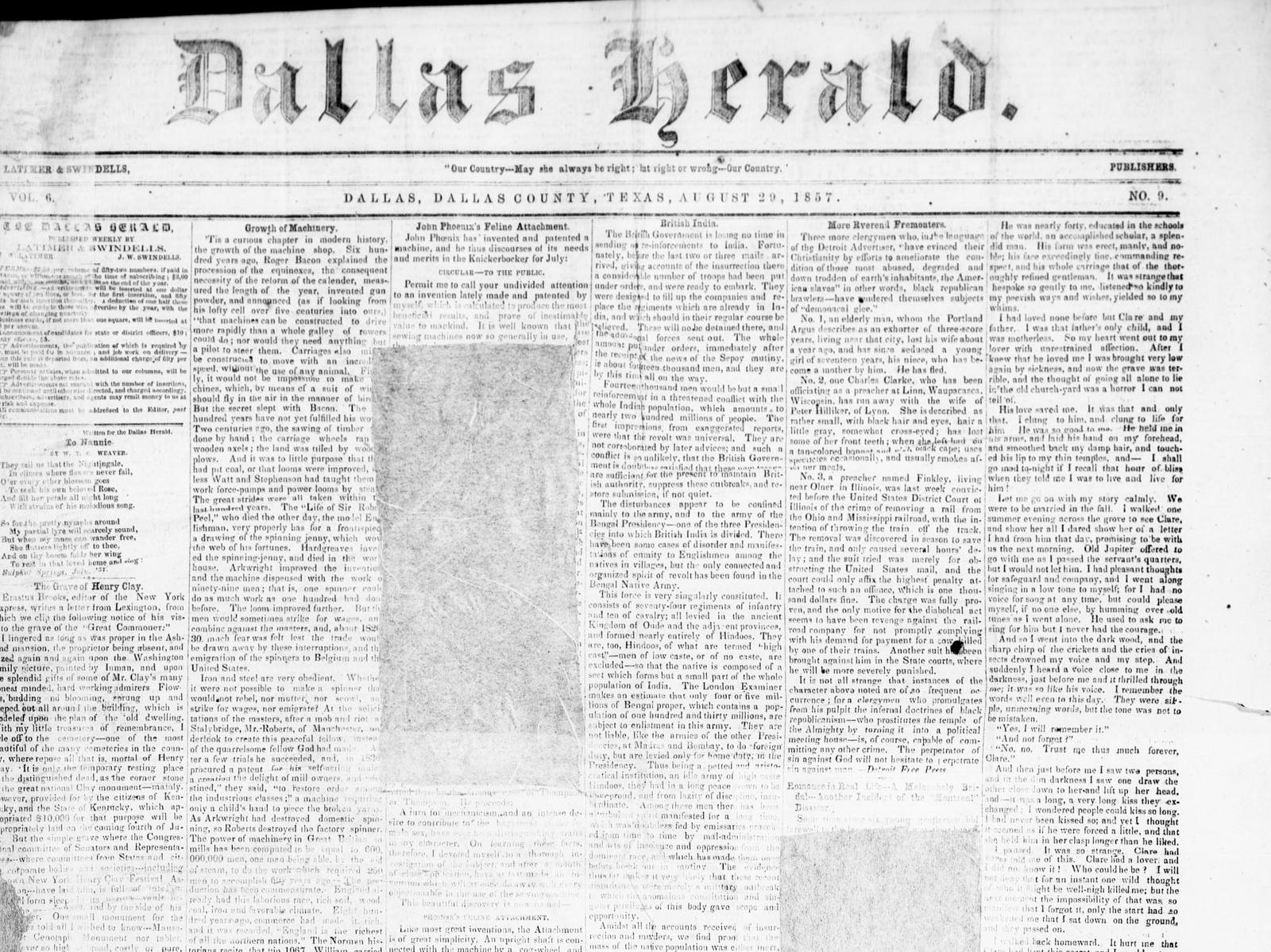
  1. The front page of the Dallas Herald for August 29, 1857, with its ornate blackletter masthead above the motto “Our Country — May she always be right; but right or wrong — Our Country,” the dateline reading DALLAS, DALLAS COUNTY, TEXAS, AUGUST 29, 1857, and seven dense columns of type below.

    August 24 to August 30, 2026

    ▶ 6:30

    The Record We Keep: Hardin R. Runnels

    Hardin Richard Runnels was born on August 30, 1820, and remains the only person who ever defeated Sam Houston at the polls. The Grand Lodge of Texas printed its own minutes for January 1852, and they place him in the room as the representative of Boston Lodge No. 69 — while the record of the same life holds thirty-nine enslaved people and a campaign to reopen the African slave trade. A week for keeping both halves of the book.

    Read & Listen →

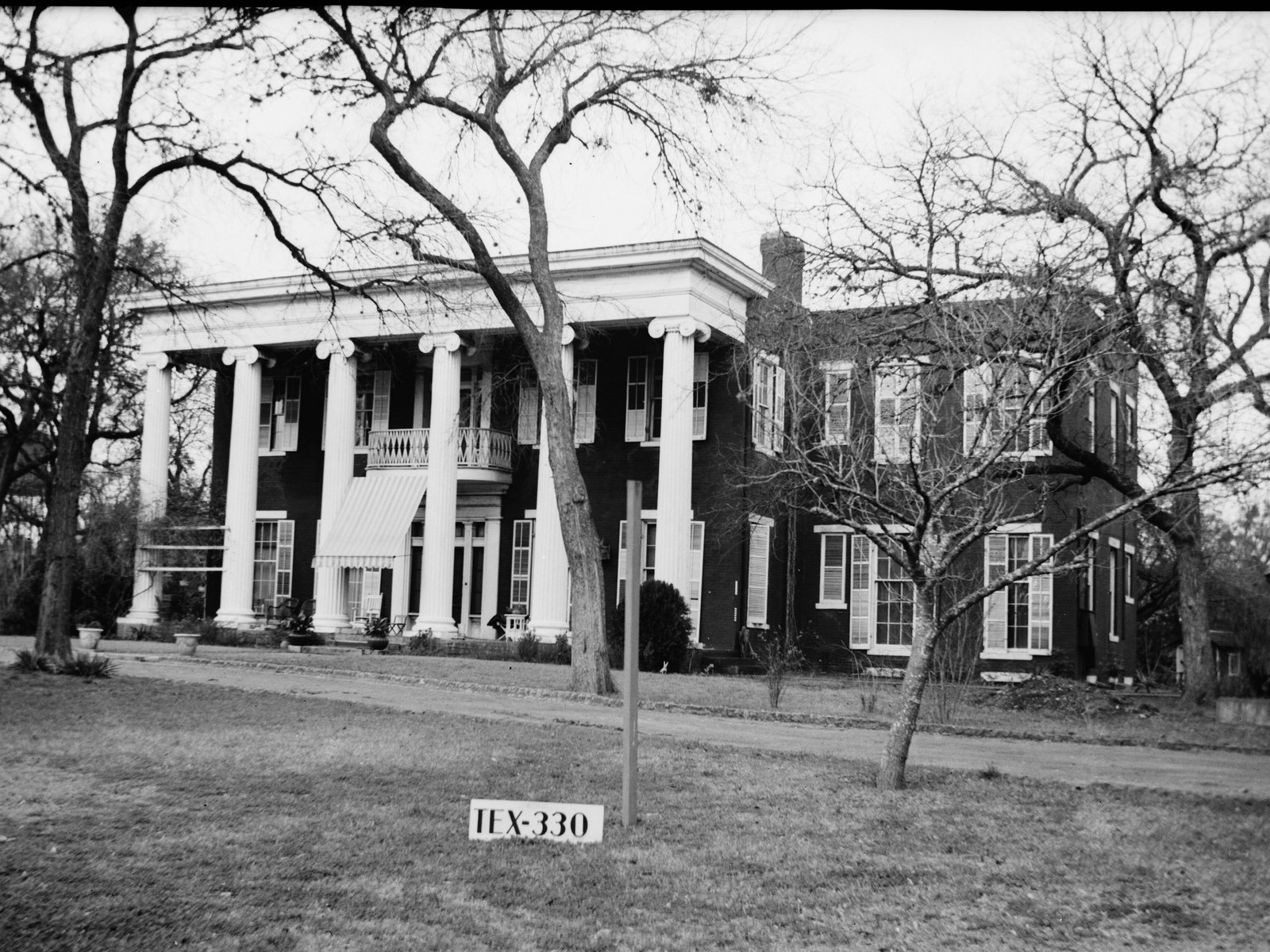
  2. Woodlawn, the Greek Revival mansion of Governor Elisha M. Pease in Austin — a two-story brick house behind a six-columned Ionic portico, photographed in winter for the Historic American Buildings Survey, with a small TEX-330 survey placard standing on the lawn.

    August 17 to August 23, 2026

    ▶ 5:55

    The Honest Ledger: Elisha M. Pease

    Just past this week's edge falls the death of Elisha Marshall Pease — August 26, 1883 — the Connecticut clerk who kept the Republic of Texas's books, signed the 1854 school law that first funded Texas public education, and governed a state whose political generation was Masonic to its core. His own lodge membership rests on tradition; his ledger does not.

    Read & Listen →

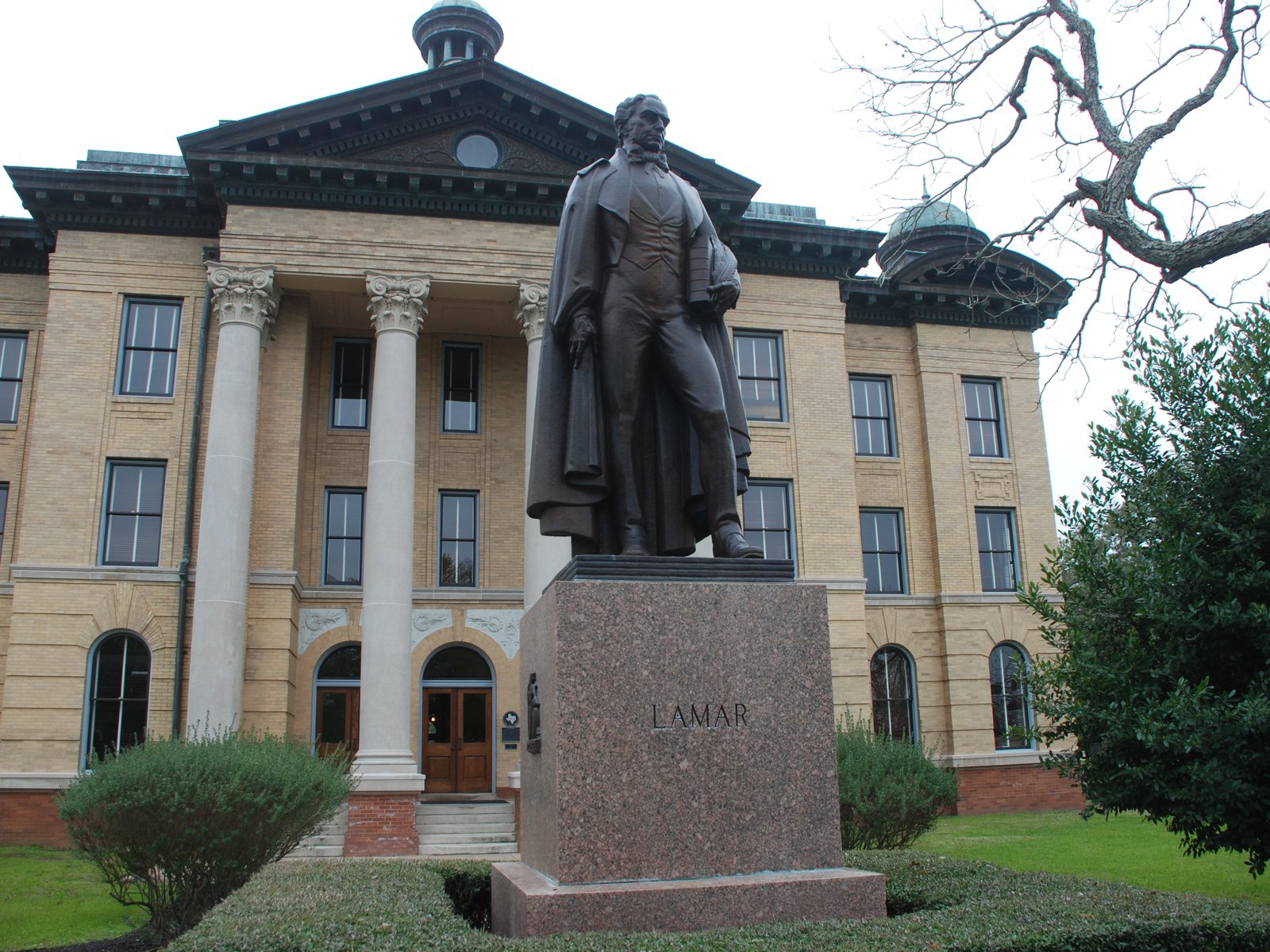
  3. Statue of Mirabeau B. Lamar in a long flowing cape, holding a document at his side, standing on a red granite base carved with the name LAMAR before the columned facade of the Fort Bend County Courthouse in Richmond, Texas.

    August 10 to August 16, 2026

    ▶ 6:06

    The Cultivated Mind: Mirabeau B. Lamar

    This week holds the birthday of Mirabeau Buonaparte Lamar — August 16, 1798 — poet, cavalry commander at San Jacinto, second president of the Republic of Texas, and the man Texas calls the Father of Texas Education, whose name stands in the member ledger of Harmony Lodge No. 6 at Galveston and whose grave lies in the old Masonic cemetery at Richmond.

    Read & Listen →

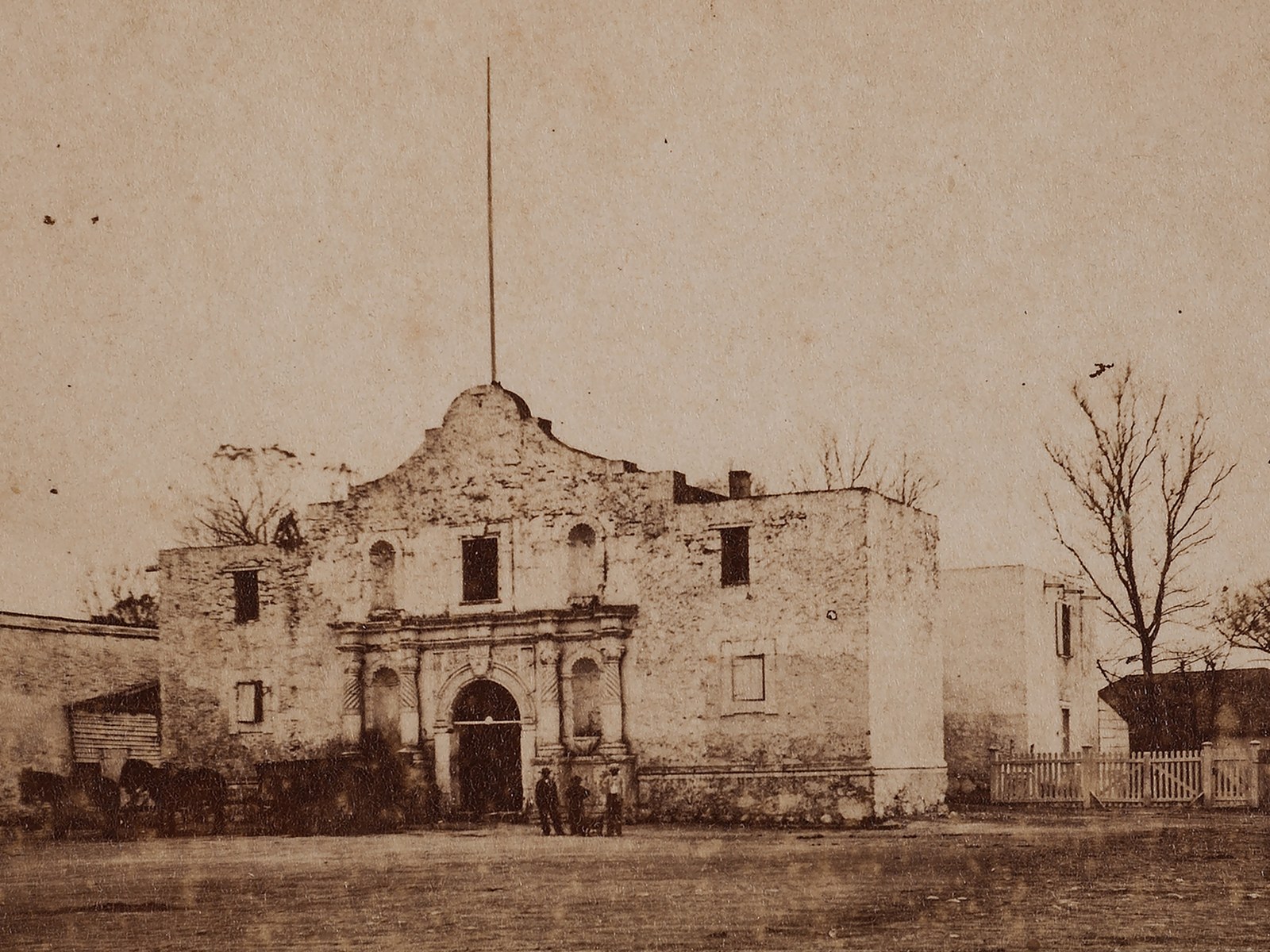
  4. Sepia 1860s photograph of the Alamo church in San Antonio, with its carved stone doorway and curved gable, a tall flagstaff rising above the roofline, and three men standing near the entrance.

    August 3 to August 9, 2026

    ▶ 6:46

    The Young Colonel: William Barret Travis

    This week holds the birthday of William Barret Travis — August 9, 1809, by his family's Bible, though tradition long kept August 1 — the South Carolina-born, Alabama-raised lawyer, editor, and Mason of Alabama Lodge No. 3 who, at twenty-six, commanded the Alamo and addressed the most famous letter in Texas history to the people of Texas and all Americans in the world.

    Read & Listen →

  5. Lithograph portrait of Thomas J. Rusk, head and shoulders, in a dark coat, vest, and cravat, in a detail from a memorial print inscribed 'Hon. Thomas J. Rusk, Late Senator from Texas.'

    July 27 to August 2, 2026

    ▶ 6:24

    The Stonemason's Son: Thomas J. Rusk

    This week marks the death of Thomas J. Rusk on July 29, 1857 — the stonemason's son who signed the Texas Declaration of Independence, fought at San Jacinto, commanded the army, presided over annexation, and helped found the Grand Lodge of Texas. He died holding the second-highest office in the United States Senate, and Texas has never fully reckoned with how much of its framework one man quietly built.

    Read & Listen →

  6. Sam Houston in 1856, shown from the knees up in a dark frock coat, standing and facing right, in a detail from a Library of Congress photograph.

    July 20 to July 26, 2026

    ▶ 6:56

    Sam Houston's Long Road to Huntsville

    This week marks the death of Sam Houston on July 26, 1863 — the Raven of the Cherokee, the victor of San Jacinto, the president who presided over the founding of the Grand Lodge of Texas, and the governor who gave up power twice in one week rather than break an oath. A look at the whole of an incredible, contradictory man, and how Masonic memory holds him.

    Read & Listen →

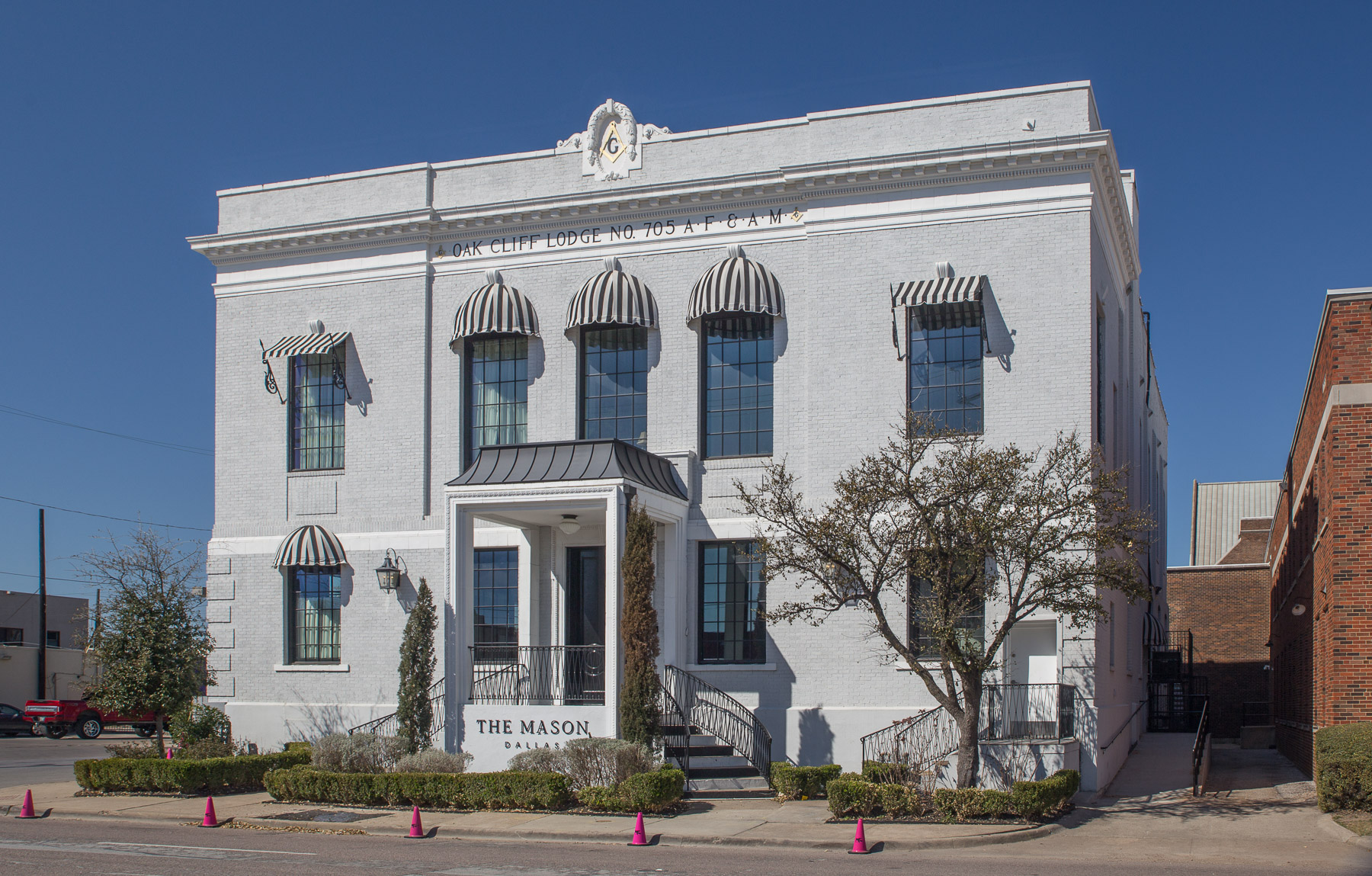
  7. The Oak Cliff Masonic Lodge building in Dallas, a two-story white brick temple with OAK CLIFF LODGE NO. 705 A.F. & A.M. carved across the facade and a square-and-compasses medallion at the parapet.

    July 13 to July 19, 2026

    ▶ 5:42

    Oak Cliff Lodge and the Memory Stored in Buildings

    This week looks at Oak Cliff Lodge No. 705 and its Dallas temple building, a reminder that Masonic history is also carried by architecture, neighborhoods, markers, and reuse.

    Read & Listen →

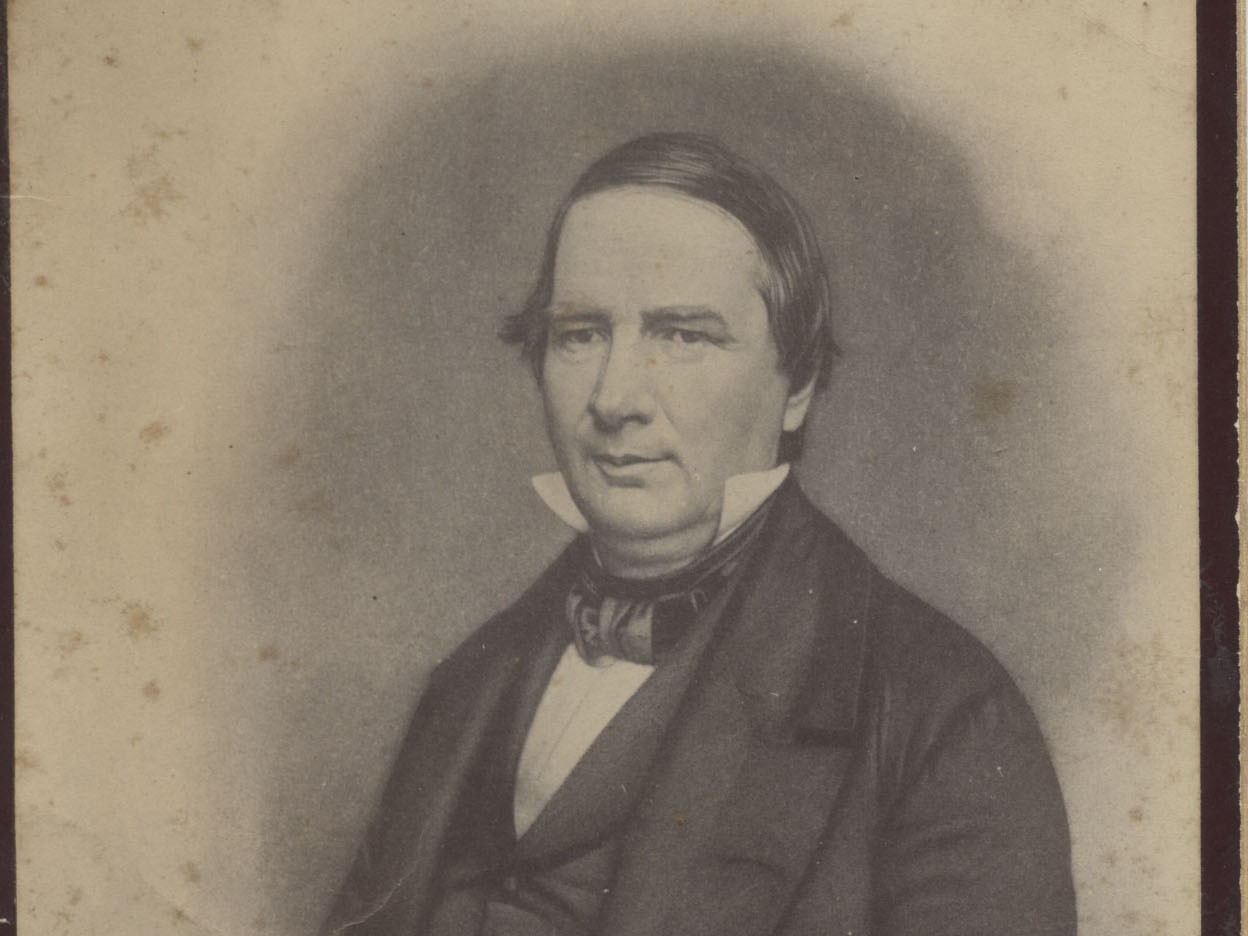
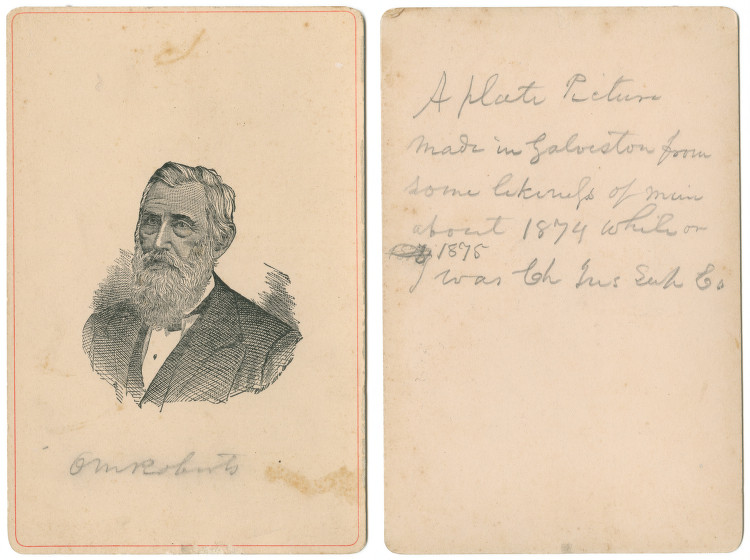
  8. Front and back of an 1870s cabinet card of Oran Milo Roberts: an engraved bearded portrait with his signature, and a handwritten note on the reverse.

    July 6 to July 12, 2026

    ▶ 5:26

    Oran M. Roberts and the Work of Preserving Texas Memory

    This week follows Oran M. Roberts, a jurist, governor, teacher, and historical writer whose life shows how Texas memory was preserved through courts, classrooms, and civic institutions.

    Read & Listen →

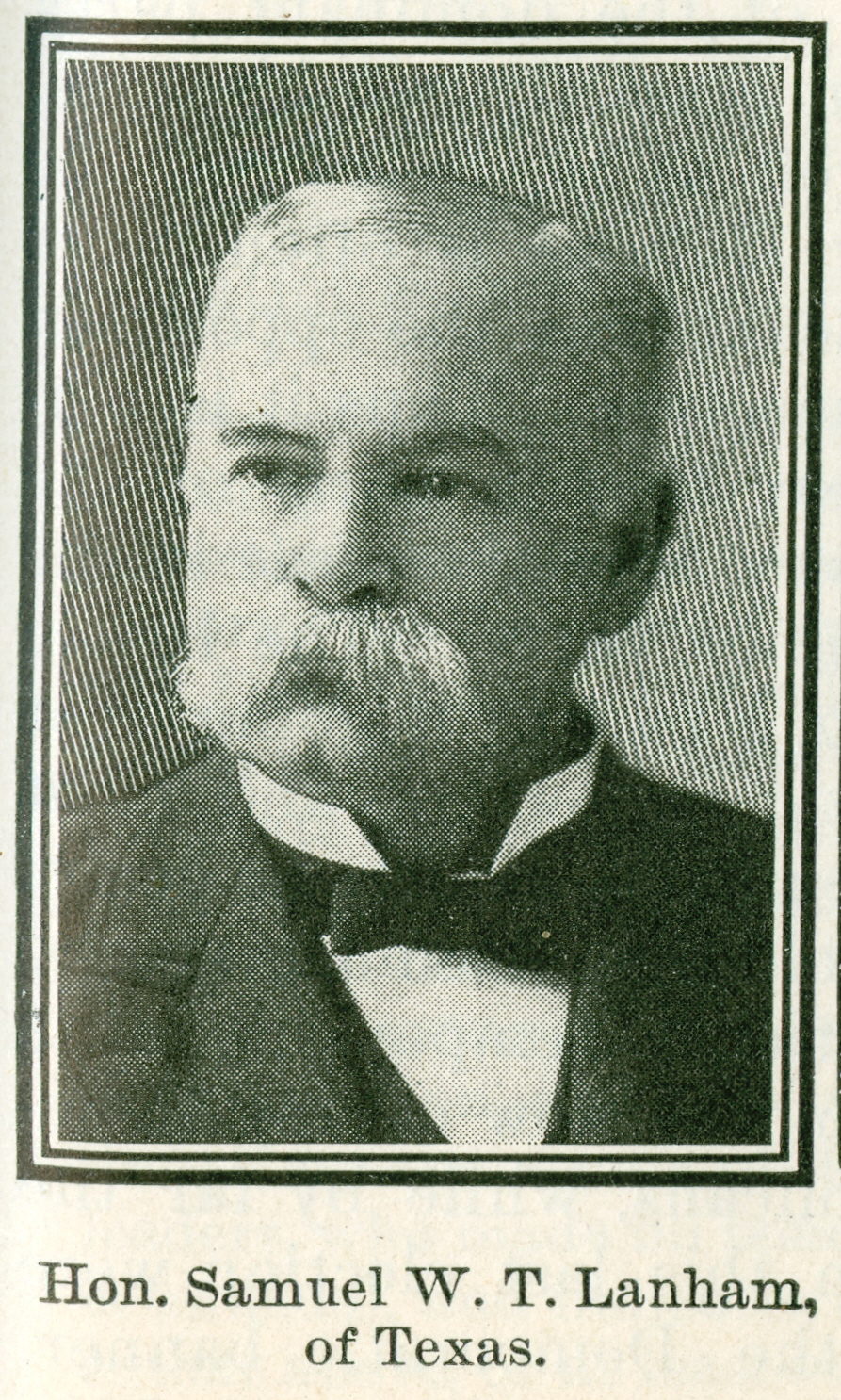
  9. Halftone portrait of Samuel W. T. Lanham of Texas in a dark suit and bow tie, captioned Hon. Samuel W. T. Lanham, of Texas.

    June 29 to July 5, 2026

    ▶ 5:34

    S. W. T. Lanham and Public Life After the Frontier

    Born on July 4, S. W. T. Lanham carried Texas public life from the postwar frontier into Congress, the governor's office, and the civic institutions of Weatherford.

    Read & Listen →

Open the Full Weekly Archive →

Older Archive

Archived Weekly Subjects